Calcium transfer to the mammary gland is a key process for milk production, but calcium supplied with the cow's diet also performs other important functions, such as bone formation and regulation of metabolic functions. The entire homeostasis of calcium in the cow's body, i.e. the maintenance of a balance between the amount of calcium absorbed from the gastrointestinal tract, the amount deposited in the bones (both own and during pregnancy - for the fetus), and the amount excreted in feces, urine and milk, is hormonally controlled and depends on a number of factors acting at specific times.
In high-yielding dairy cows, immediately after parturition, a disadvantageous situation related to mineral metabolism can occur. After the drying-out period, when the body's calcium requirements are low due to the lack of milk production, the cow's endocrine system switches to calcium anabolism. Calcium deposition in the bone stimulated by calcitonin predominates, leading to a reduction in calcium absorption from the ration. Then, after secretion of calcium-rich milk, there is a drastic decrease in the concentration of this macronutrient in the blood, which is called hypocalcemia (serum Ca levels < 7 mg/dl). Increasing calcium intake postpartum is not effective because high levels of the hormone calcitonin inherited after desiccation block the absorption and proper retention of calcium in the body.
Hypocalcemia in its clinical, or acute, form leads to a deadly condition known as postpartum paralysis or milk fever. Calcium is essential for the proper conduction of nerve impulses, which is why the symptoms are muscle spasms and paralysis that make it impossible for the cow to remain standing. A lesser drop in blood calcium concentration (subclinical hypocalcemia) also has serious complications, such as placental retention, displacement of the digestive tract, rumen atony or mastitis.
The main principles of milk fever prevention include proper nutritional management during the perimenopausal period and the use of acidifying diets. Insufficient utilization of calcium reserves from the bones and poor absorption of calcium from food are considered the main causes of hypocalcemia syndrome. Anion-cation balance (DCAD) and the content of calcium, magnesium, phosphorus, sulfate and other minerals in the feed ration during the suckling period have an important influence on the effective mobilization of calcium reserves from bone during the periparturient period, through the action of parathormone (calcitonin antagonist).
Studies conducted by specialists from the US and Germany indicate that in dried cows, when anionic salts are administered, high doses of calcium (>100 g per day) should be applied as early as two weeks before parturition. On the other hand, when bitter salts are not used, the administration of calcium, magnesium and phosphorus in amounts appropriate for the lactation period is recommended to begin only before parturition itself. To provide easily absorbed forms of these elements, special preparations such as Ecocal, Ecocal max and Calcibol boluses are very helpful.
Ecocal max provides highly absorbable calcium, the absorption of which is staggered due to the use of two different forms: pantothenate and chloride. The formula effectively prevents a decrease in blood calcium concentration. It also contains magnesium and vitamin D3, the deficiency of which can lead to hypocalcemia. In addition, thanks to niacin and B vitamins, it supports liver function and activates energy metabolism. Ecocal max is easy to apply, as a single dose of the product is 250g.
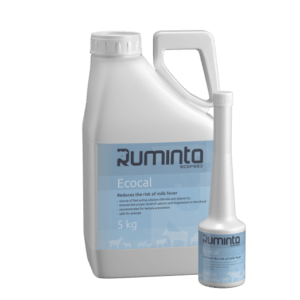
The big advantage of the preparation Ecocal is its high absorption of calcium, which is made possible by the addition of vitamin D3. The formula also provides an adequate amount of magnesium, which is important for preventing hypocalcemia. Therefore, Ecocal prevents the occurrence of milk fever and prevents placental retention, especially in high yielding and multiparous cows. In addition, the formula is effective in the prevention of ketosis thanks to its content of glycerine, which is a precursor to glucose, and B vitamins, which activate energy metabolism.
Boluses are also gaining popularity. Our product, Calcibol, is unique due to its content of five different forms of calcium and a high dose of vitamin D3. Thanks to the fast dissolving capsule, the contents of the formula are released in the rumen within 5 minutes, which directly affects its effectiveness in emergencies.