

The system can be washed after every milking, yet deposits can gradually appear on its surfaces. The problem isn't always due to a lack of cleaning. More often, one of the elements of the entire process is failing: the concentration of the agent, the temperature, the time, the flow rate, the amount of water, or the correct combination of alkaline and acidic cleaning.
This is important because visible milk stone is usually a sign that the cleaning program needs to be reviewed. The deposit creates a surface that is more difficult to clean and can encourage the growth of microorganisms. Teagasc points out that mineral deposits in the system facilitate the colonization of thermoduric bacteria, among others.
What exactly is a milk stone?
In milking systems, we encounter various types of contamination. After milking, organic components derived from milk, primarily fat and protein, remain. Mineral deposits are a separate issue.
Therefore, one type of cleaning agent may not effectively remove all contaminants.
In simple terms:
alkaline washing is primarily responsible for removing organic contaminants such as fat and protein,
Acid washing is primarily used to dissolve and remove mineral deposits.
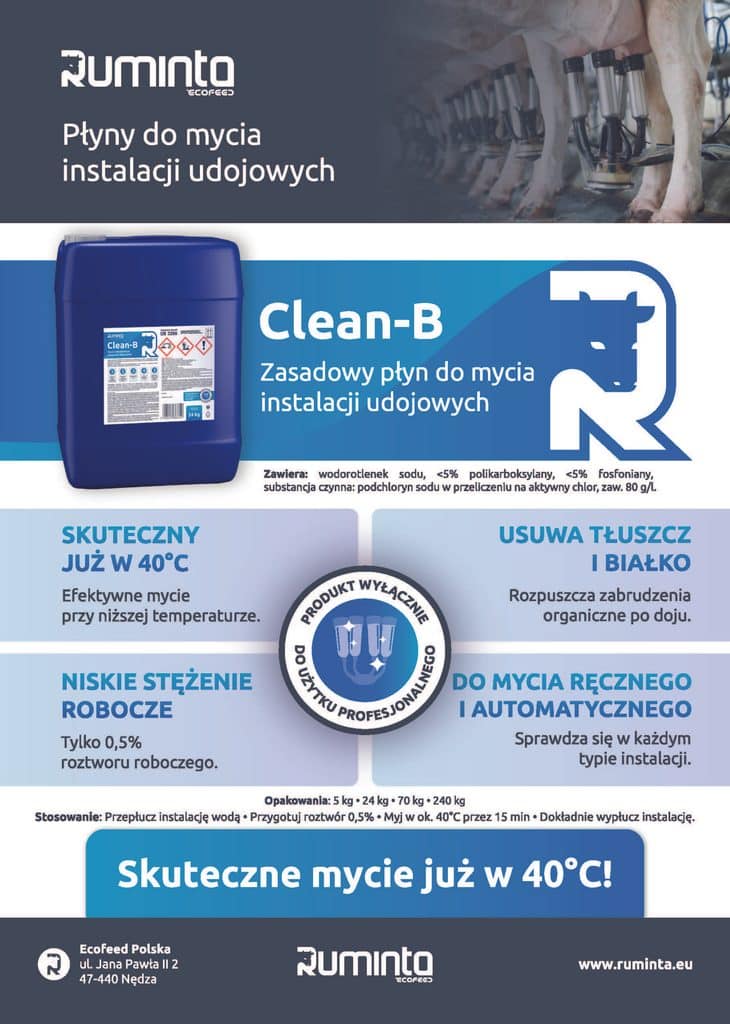
That's why a proper milking system hygiene program should incorporate both types of cleaning. Ruminta Clean-B is an alkaline product with chlorine designed to remove fat and protein deposits, while Acid 3 Plus is an acidic product designed to clean and descaling milking equipment and remove mineral deposits.
Why can deposits form despite regular washing?
Simply running a cleaning program doesn't guarantee that the system has been effectively cleaned. The chemical must reach the entire surface in the appropriate concentration, have sufficient contact time, and operate under the appropriate conditions.
Teagasc focuses on three basic elements of effective cleaning: temperature, appropriate concentration of the preparation and turbulence of the solution in the installation.
If any of these parameters deviate from the target, subsequent cycles may not remove all residue. Over time, a minor problem will become increasingly apparent.
1. Too little preparation in relation to the amount of water
More water doesn't always mean a better wash. If the amount of detergent isn't increased along with the volume, the working solution will be too weak.
The problem can also occur in automatic car washes. Improper dispenser calibration, a clogged product intake tube, or a setting left in place after a product change can result in the system receiving a different amount of chemicals than intended.
The farm studies reported by Teagasc showed that errors related to detergent amount, hot wash temperature, and water volume do occur in practice. The authors also recommend checking the actual detergent consumption of automatic washing systems.
However, you shouldn't assume that higher concentrations are always better. The concentration should correspond to the specific product's instructions and its conditions of use.
2. Acid washing is done too infrequently
If the alkaline part of the program is working properly, the system may appear relatively clean, yet gradually become covered with mineral deposits.
In such a situation, the problem may be too low a descaling frequency.
Water quality also plays a role. Hard water systems absorb more minerals, so the frequency of acid cleaning may need to be increased. Teagasc recommends taking water hardness into account when selecting a program and recommends more frequent descaling in areas with more severe hard water problems.
If the deposit returns quickly after being removed, testing the water hardness may tell you more than blindly increasing the dosage.
3. The solution temperature is incorrect
Temperature is one of the parameters that can be easily misjudged. The temperature set on the heater may not necessarily correspond to the temperature of the solution actually circulating through the system.
For programs using hot wash, Teagasc recommends monitoring the solution temperature at the beginning and end of the cycle. In the hot wash procedures described by Teagasc, the reference point is approximately 75-80°C at the beginning of the cycle, and the solution should not be too cold after the cycle ends. However, specific requirements should always be tailored to the product and installation being used.
Excessive circulation time may not necessarily improve the effect. It may lead to excessive cooling of the solution.
4. The solution does not reach all places effectively
Chemistry is just one element of CIP. Appropriate mechanical action of the flowing solution is also necessary.
If the flow or turbulence is insufficient, some surfaces may not be cleaned properly. This could be due to a problem with the air supply, a blockage in a component, or a malfunctioning flushing system.
Therefore, it's worth noting whether the deposits are present throughout the entire system or are recurring in specific locations. The latter situation may indicate not so much a poorly selected chemical, but rather a problem with the flow or design of a given section. Teagasc emphasizes the importance of turbulence and proper solution flow for effective cleaning.
5. Water or solution remains in the installation after cleaning
Once the program is complete, the system should drain properly.
If water remains in low points in the pipes, it's worth checking the drains and the installation. For automatic washing systems, the operation of the system's drainage components should also be verified. Teagasc recommends checking proper drainage as one of the elements of an automatic car wash's performance evaluation.
6. They try to solve every problem with one drug.
If fat and protein residues are a problem, an effective alkaline wash is essential. If mineral buildup is a concern, acidic wash should also be considered.
In practice, this means that if limescale is visible, simply increasing the frequency of alkaline washing may not solve the cause of the problem.
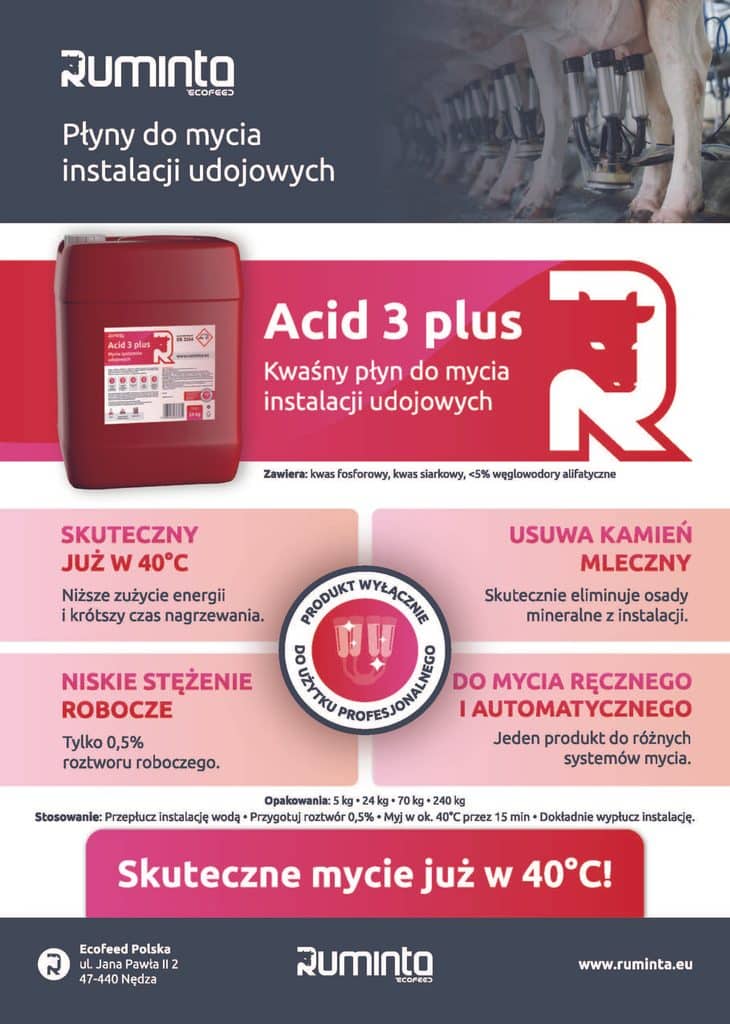
Ruminta also separates these two tasks in its line for milking installations. Clean-B is an alkaline chlorine product containing, among other ingredients, sodium hydroxide and sodium hypochlorite, designed to remove fat and protein deposits. Acid 3 Plus is based on phosphoric and sulfuric acid and is designed to remove mineral deposits and descaling.
How to use Clean-B i Acid 3 Plus?
For specific products, please follow the manufacturer's instructions, as the application parameters of different products are not interchangeable.
According to current guidelines, Ruminta Clean-B is used as a 0.5% solution – 50 ml per 10 liters of warm water. The guidelines recommend a contact time of 15 minutes at 40°C, followed by a copious rinse with potable water.
For Acid 3 Plus, a standard solution is prepared at a 0.5% rate – 50 ml per 10 liters of warm water – and washed for approximately 15 minutes at a temperature of approximately 40-80°C. For heavily soiled areas, the product materials recommend a 1-2% solution, i.e., 100-200 ml per 10 liters of water. After washing, the system should be thoroughly rinsed with water.
However, a higher concentration should not be considered a way to compensate for overall program errors. If the dosage is correct but sediment still appears rapidly, other parameters should be checked.
Is the sediment coming back? Check the entire process, not just the chemical canister.
In case of recurring milk stone, it is a good idea to go through the washing program from beginning to end and check:
the actual amount of alkaline and acidic agent taken,
volume of water in individual stages,
the temperature of the actual solution, not just the heater setting,
circulation time,
flow and turbulence in the installation,
frequency of acid washing,
water hardness and quality,
patency of the dosing lines,
condition of rubber, seals, pipes and other installation elements,
proper emptying of the installation after the cycle is completed.
It's especially important to check areas where sediment appears first. Worn, cracked, or damaged components are more difficult to clean effectively and can encourage biofilm growth. Penn State recommends inspecting seals, liners, and tubing for cracks, wear, and sediment buildup, among other things, when troubleshooting milk quality issues.
Descaling is not a substitute for disinfection.
Cleaning and disinfection serve different purposes. Removing deposits from surfaces is essential for effective hygiene, but it does not, in itself, replace the actual disinfection step.
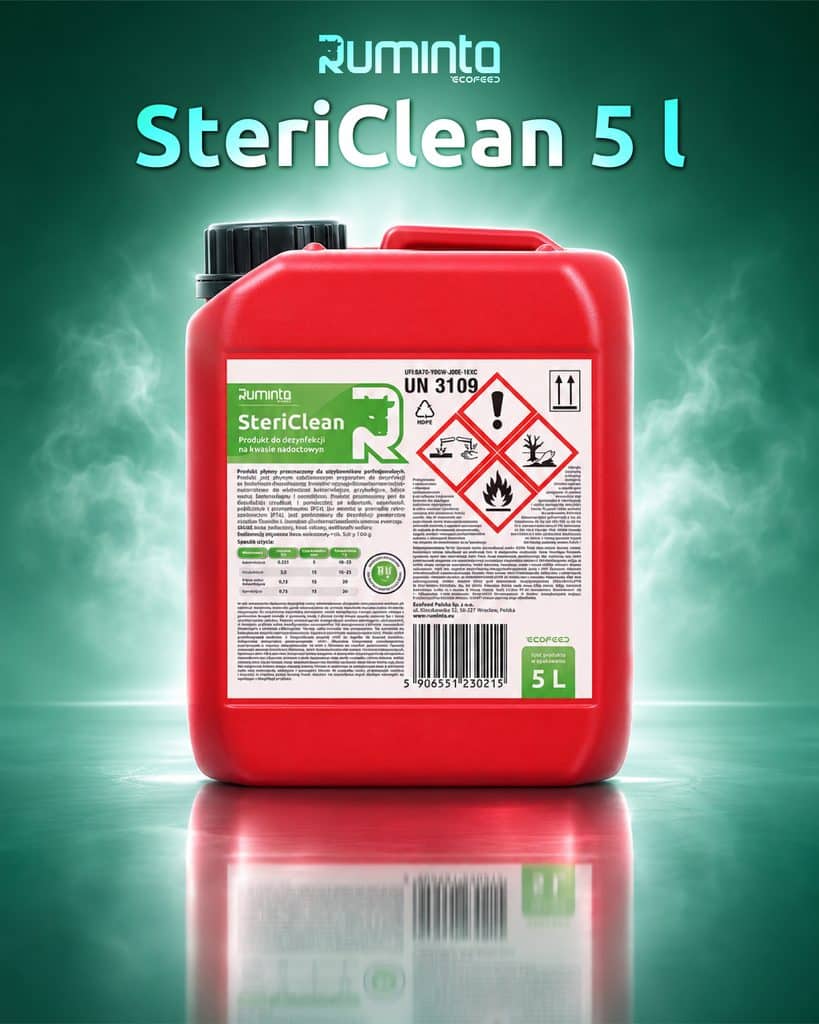
Rumint's offer includes a product designed for this purpose. SteriClean Based on peracetic acid, acetic acid, and hydrogen peroxide. The product is intended for disinfecting surfaces, equipment, and milking installations. Its dosage and contact time depend on the required effect.
In practice, it is worth thinking about installation hygiene as a system: removal of organic contaminants, control of mineral deposits and properly carried out disinfection have separate tasks.
A well-functioning washing program should be monitored
The most treacherous situation occurs when the automatic program runs daily and gives the impression that everything is working properly. However, a clogged dispenser tube, a decalibrated pump, a drop in temperature, or a change in water hardness can gradually reduce cleaning effectiveness.
Therefore, if deposits appear, it's not worth starting by simply increasing the amount of chemicals. It's better to measure the process parameters and find the weak point.
A clean system is the result of the right combination of chemistry, temperature, time, and mechanical action. If the milk stone returns, one of these factors usually holds the answer.


