Diarrhea, alongside digestive system diseases, is the main cause of calf deaths. There are many factors contributing to its occurrence, but the most important are improper feeding of colostrum, milk, or milk replacers, inappropriate microclimate conditions, and infections caused by bacteria and viruses.
Diarrhea is a symptom of digestive system dysfunction, causing dehydration, which makes it particularly dangerous. Failure to constantly monitor and observe animals for several hours can lead to the loss of valuable electrolytes and increase the risk of dehydration, which can result in death. Treatment effectiveness and recovery depend primarily on the speed of diagnosis, the calf's condition, and the underlying factors. It is also important to note that even after effective treatment, the growth and development of the young animal may be significantly limited. Regarding pathogens, the main causes of diarrhea are Escherichia coli and Salmonella, Cryptosporidium protozoa, Eimeria coccidia, as well as rotaviruses and coronaviruses, which have a high affinity for the intestinal epithelium. However, it is important to understand that calves' greater susceptibility to infections results from a weakened immune barrier. This is one of the reasons why it is so important to administer colostrum to the animal as soon as possible after birth. In addition to its immunological values, the organoleptic characteristics of colostrum are also important. By definition, it should be thick and yellowish. Colostrum from cows dried improperly may contain an admixture of blood, indicating inflammation of the mammary gland. Its use in calf nutrition can significantly increase the risk of diarrhea. The appropriate dosage and method of colostrum administration are also important. Due to the limited stomach capacity and the need to create an esophageal channel, a calf should receive no more than 2 liters of colostrum administered from a bottle or bucket with a teat in the first hours of life. For older calves fed milk or milk replacers, the amount fed should not exceed 3 liters. Otherwise, there is a risk of acidosis. Younger calves should be fed more frequently, four to three times a day, and the portion size should be adjusted according to age. An important factor influencing the absorption of nutrients, especially colostrum, is its appropriate temperature, which should be at least 35°C.
Another factor contributing to the development of diarrhea in calves is environmental conditions. In livestock buildings that are not regularly disinfected, with high humidity and high animal density, pathogens can more easily accumulate and spread.
Diagnosis and management of sick calves
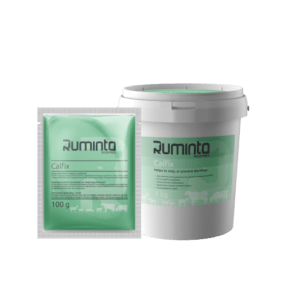
In the initial stages of diarrhea, calves experience diluted feces and weakness. In more advanced cases, body temperature increases and appetite is lost, manifesting as a lack of sucking. Often, farmers, upon noticing the condition in its early stages, decide to completely discontinue feeding colostrum, milk, or milk replacers, claiming that this will worsen the calf's condition. This is flawed reasoning. Liquid food contains not only the nutrients necessary to sustain life but also biologically active substances that support the regeneration of damaged intestinal epithelium. However, the appropriate amount of food is controversial. In cases of diarrhea, it is recommended to reduce the volume of food fed by one-third to avoid further damage. The use of antidiarrheal agents with a comprehensive composition is also a good solution – due to the intensive loss of minerals from the body and the risk of dehydration. Examples of such preparations are Diablock and Calfix mraki Ruminta, which, in addition to electrolytes and nutrients, also contain pectins. Pectins are polysaccharides that constitute an integral structure of plant cell walls. They are a soluble component of dietary fiber, which forms a gel in an acidic environment. In the case of diarrhea, this property of pectins allows for thickening of the food content and stabilizing its flow. Additionally, the gel consistency protects the intestinal mucosa from pathogen attacks. These preparations are also A source of vitamins that support the immune system, and their high concentration and digestibility of ingredients help maintain the proper condition of calves.
An additional support for diarrhea in calves are rehydration supplements, such as Ecolyte. However, it's important to remember that they should be administered alternately with milk, maintaining appropriate time intervals. According to many experts, administering supplements immediately before or after milk feeding increases stomach pH, which leads to less efficient utilization of proteins such as casein. Therefore, an electrolyte supplement should be administered to the calf no later than three hours before liquid feeding.
After diarrhea, it's important to help the calf recover from the losses as quickly as possible. In this case, we recommend using Grow Plus, a highly concentrated formula based on vitamins, minerals, and amino acids. It replenishes the calf's deficiencies in these substances and allows it to quickly return to full fitness.