What is heat stress in cows?
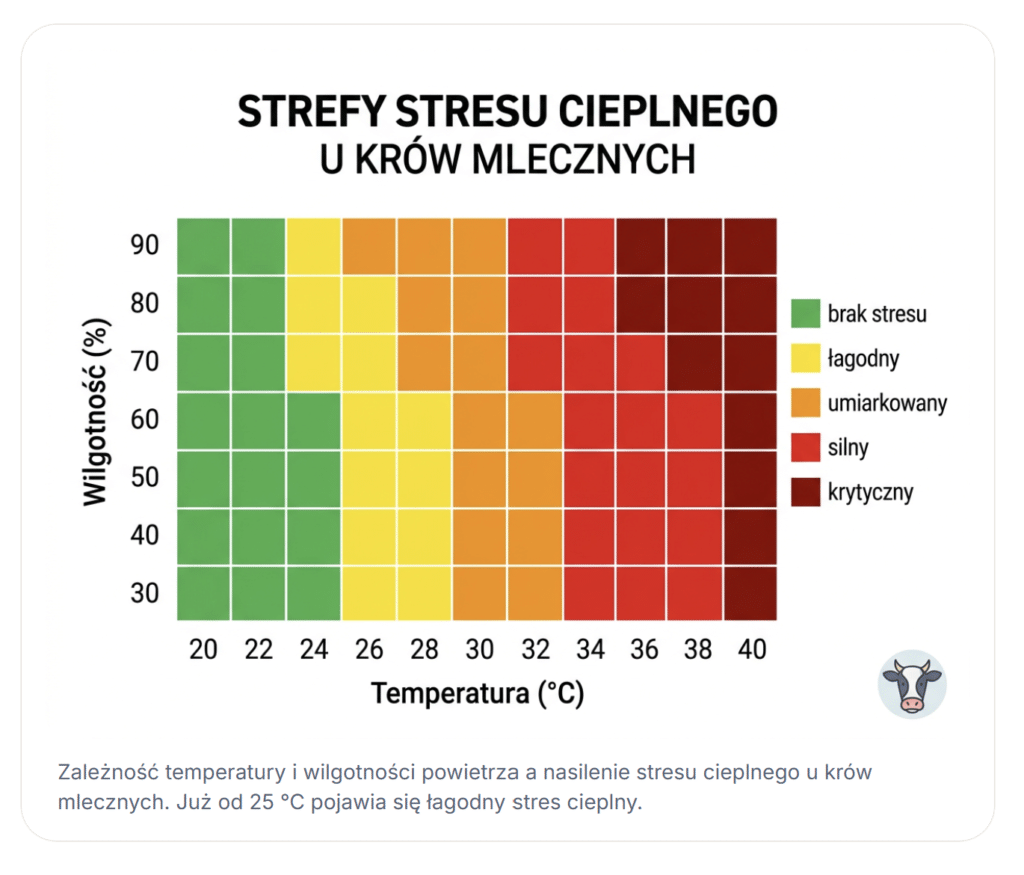
Many growers associate heat stress primarily with very high summer temperatures. In reality, the problem begins much earlier than the thermometer shows.
Dairy cows są wyjątkowo wrażliwe na wysoką temperaturę i wilgotność powietrza. Już przy temperaturze około 20–22°C oraz większej wilgotności organizm zwierzęcia może mieć problem z oddawaniem nadmiaru ciepła.
Efekt? Pojawia się heat stress, który wpływa na:
- milk yield,
- feed intake,
- cow health,
- fertility,
- economic results of the farm.
I właśnie dlatego coraz więcej hodowców przygotowuje swoje stada na okres upałów jeszcze przed nadejściem największych temperatur.
How to recognize heat stress in cows?
Symptoms of heat stress often appear gradually.
The most common signals are:
- Reduced feed intake
- less cow activity,
- panting and rapid breathing,
- greater water uptake,
- decrease in milk yield,
- deterioration of milk parameters,
- problems with pregnancy,
- greater risk of acidosis and metabolic disorders.
During hot weather, a cow's body focuses primarily on cooling itself, not on milk production.
Why is heat stress such a big problem?
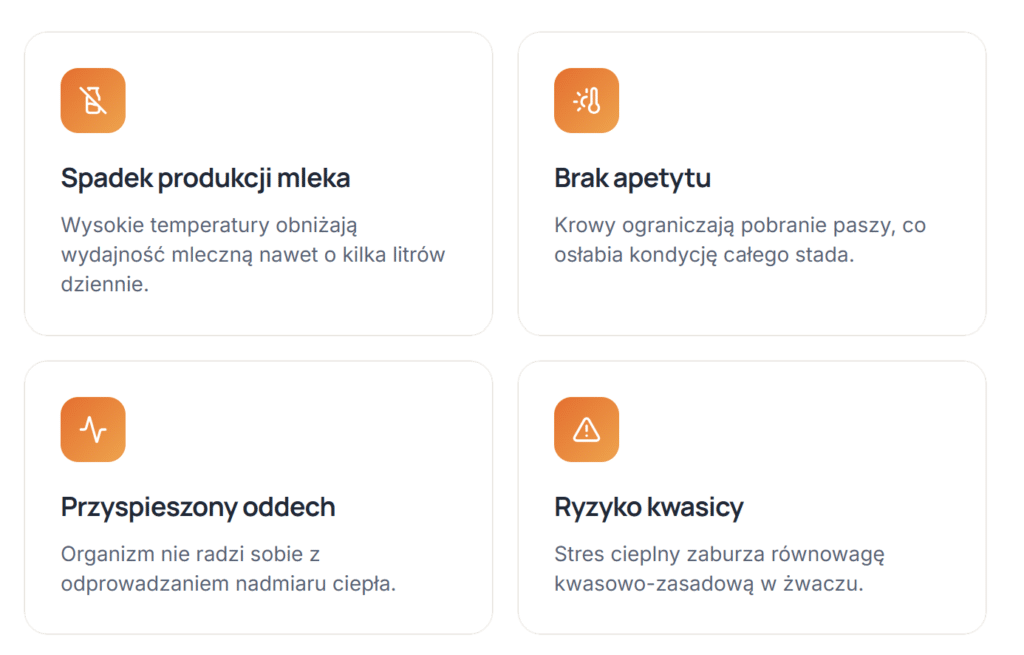
Decrease in milk yield
This is one of the first and most noticeable effects.
Cows during high temperatures:
- they eat less feed,
- have a worse energy balance,
- produce less milk.
In practice, even a few liters of milk less per animal per day can mean huge losses for the farm over the entire summer.
Poorer fertility
Heat stress also negatively affects reproduction.
During periods of high temperatures the following are often observed:
- weaker heat symptoms,
- lower fertility rates,
- greater problems with maintaining pregnancy.
This is a problem whose effects the farmer still feels long after the end of summer.
Greater risk of metabolic problems
Lower feed intake and water and electrolyte imbalances increase the risk of:
- acidosis,
- dehydration,
- problems with the functioning of the rumen,
- weakening of the body.
Therefore, appropriate support for cows in hot weather is one of the most important elements of herd management today.
How to limit the effects of heat stress?
1. Access to fresh water
During hot weather, cows can consume up to several dozen percent more water than usual.
Constant access to clean and fresh water is an absolute necessity.
2. Ventilation and cooling of the barn
Good air exchange helps reduce body overheating.
More and more farms are investing in:
- fans,
- curtains,
- sprinkler systems,
- improving air flow in the barn.
3. Nutritional support during hot weather
This is where many breeders look for additional solutions to help reduce the effects of heat stress.
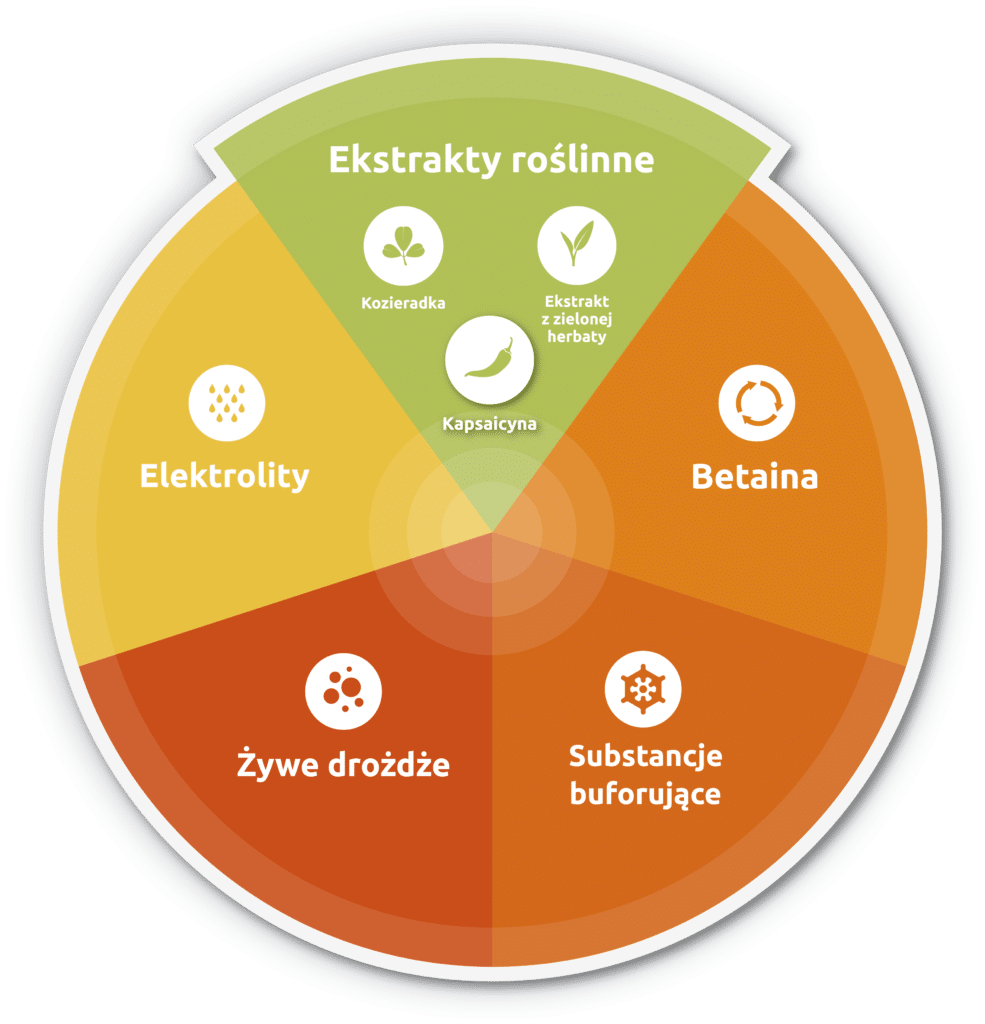
During periods of high temperatures, the cow's body needs support:
- water and electrolyte management,
- rumen function,
- feed intake,
- immunity,
- energy metabolism.

Rumistress Stop – support for cows in hot weather
Rumistress Stop is a product designed to support dairy cows during periods of high temperatures and heat stress.
The product formula has been developed to support the cows' bodies, especially when:
☀️ feed intake decreases
💧 the risk of dehydration increases
🥛 milk yield decreases
🌾 problems related to heat stress appear
The product is used on farms that want to better prepare their herd for summer and reduce heat-related losses.
How much does heat stress cost a farm?
Many farmers do not realize how much damage heat stress can cause.
Even a small decrease in milk yield:
- multiplied by the number of cows,
- number of hot days,
- current milk price,
can mean very specific amounts.
That's why we've prepared a special savings calculator that allows you to check:
✅ how much heat stress can cost your farm
✅ what savings can be achieved by appropriate herd support
👉 Rumistress Stop Heat Stress Calculator
On the website you will also find:
- description of the problem of heat stress,
- practical information for breeders,
- product details Rumistress Stop.
Why is it worth acting early?
When it comes to heat stress, prevention is key.
When the cow is already feeling the effects of the heat:
- performance drops,
- metabolic problems appear,
- the body's condition deteriorates.
That's why more and more farms are preparing their herds even before the highest temperatures arrive.
Promotion on Rumistress Stop
If you are planning to prepare your flock for the summer season, now is a good time to look into Rumistress Stop – it is currently on sale.

Product details and a savings calculator can be found here:
👉 Rumistress Stop
Summary
Heat stress in dairy cows is a real problem that can significantly affect:
- milk yield,
- herd health,
- fertility,
- economic results of the farm.
Properly preparing cows for periods of high temperatures helps reduce losses and improve animal comfort.
That's why it's worth acting early and ensuring your herd is supported before the worst of the heat arrives. ☀️🐄